.png)
Tel: +86-13761027061

E-mail: contactus@audfly.com

.png)


.png)
An audio spotlight speaker is a highly directional speaker designed to deliver sound to a specific listening area while reducing sound spill into surrounding spaces. Unlike conventional loudspeakers, which typically distribute sound over a relatively wide area, a directional speaker concentrates audio toward a defined zone.
This focused approach is useful when audio needs to be heard clearly by a specific listener or group without filling the entire room with sound. Typical applications include museums, exhibitions, digital signage, retail displays, kiosks, education, transportation facilities, and other environments where localized audio is required.
The term "Audio Spotlight" is commonly associated with highly focused audio systems. In practice, different directional audio products may use different acoustic technologies and designs. This guide explains the general concept, how focused audio systems work, where they are used, and what to consider when selecting a directional speaker.
Many highly directional audio systems use ultrasonic or parametric acoustic technology to create a narrow sound beam. The basic principle is different from simply making a conventional speaker louder: the objective is to control the direction and coverage of the sound.
The source audio, such as speech, music, product information, or an audio guide, is supplied to the directional speaker system.
In ultrasonic parametric systems, the audible audio signal is modulated onto an ultrasonic carrier. The ultrasonic frequency itself is generally outside the normal range of human hearing.
A speaker array is used to generate a highly directional acoustic beam. Compared with a conventional loudspeaker, the resulting sound field can be controlled more precisely toward a target area.
Through the nonlinear behavior of air, the modulated ultrasonic signal produces audible components as it travels through the air. The result is a localized audio experience that can be directed toward a particular listening zone.
The actual performance of a directional speaker depends on factors such as speaker design, installation distance, beam angle, listening position, background noise, reflective surfaces, and the acoustic characteristics of the environment.
For this reason, directional audio should be viewed as a complete acoustic solution rather than simply a conventional speaker with a narrower enclosure.
The main advantage of an audio spotlight speaker is its ability to create a localized listening area. Depending on the system and installation environment, this can provide several practical benefits.
These characteristics make directional speakers particularly useful when a project needs both clear audio and better control over where that audio is heard.
The main difference between an Audio Spotlight speaker and a conventional loudspeaker is the way sound is distributed. Traditional speakers are often designed to cover a relatively broad area, while directional speakers are designed to concentrate sound toward a target zone.
| Feature | Audio Spotlight / Directional Speaker | Traditional Speaker |
|---|---|---|
| Sound coverage | Focused toward a target area | Usually broader coverage |
| Sound spill | Can be reduced through directional control | Generally greater outside the target area |
| Independent audio zones | Well suited | More difficult to achieve |
| Museum exhibits | Well suited for localized audio | May create unwanted overlap |
| Digital signage | Suitable for targeted audio | Audio may spread beyond the display |
| Large-area background music | Not usually the primary application | Often more appropriate |
The terms audio spotlight speaker, directional speaker, and parametric speaker are closely related when discussing highly focused audio. They describe related aspects of directional audio rather than three completely separate types of speakers.
A parametric speaker generally refers to a speaker system that uses the parametric acoustic effect, often involving ultrasonic carriers, to produce highly directional audible sound. "Directional speaker" is a broader term describing the ability to control the direction and coverage of sound.
"Audio Spotlight Speaker" is commonly used to describe a highly focused audio speaker designed to deliver sound toward a specific listening area. Depending on the product and technology, a highly directional speaker may use parametric, ultrasonic, beamforming, or other acoustic approaches to achieve controlled sound distribution.
Therefore, when evaluating an audio spotlight speaker or another directional audio product, it is more useful to consider the actual technology, beam characteristics, sound pressure level, frequency response, installation requirements, and intended application rather than relying only on terminology.
Focused audio is especially useful in environments where multiple sound sources operate close to each other or where excessive background sound should be minimized.
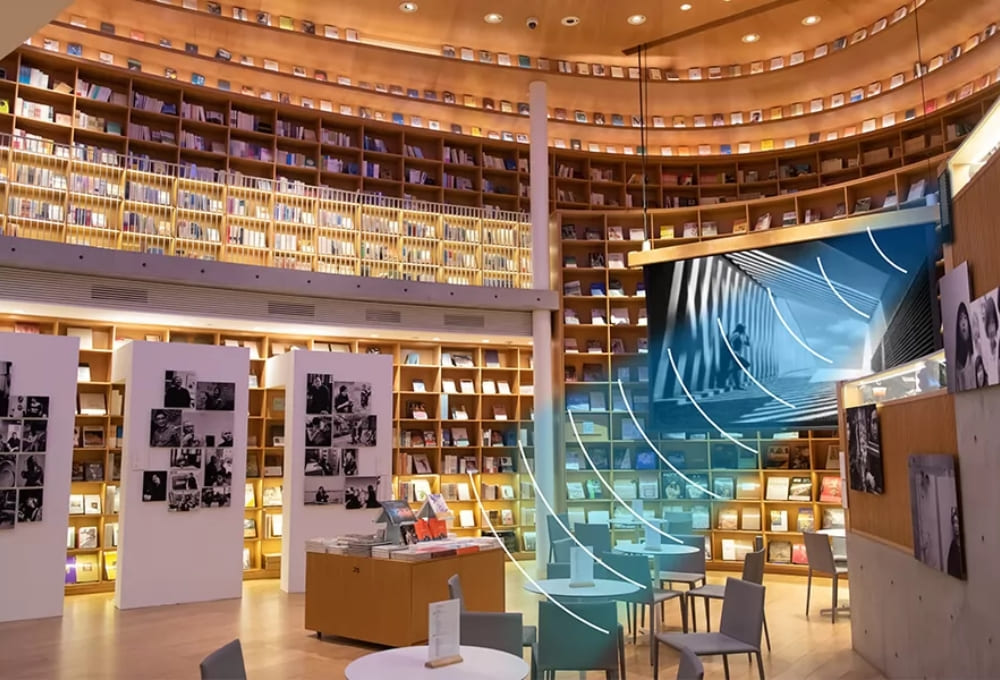
Directional speakers can provide audio descriptions for individual exhibits. A visitor standing near an exhibit can hear the corresponding explanation without requiring the same audio to be broadcast throughout the gallery.
Directional audio can be integrated with displays, advertising screens, product demonstrations, and promotional areas. This allows audio messages to be directed toward customers in a specific zone.
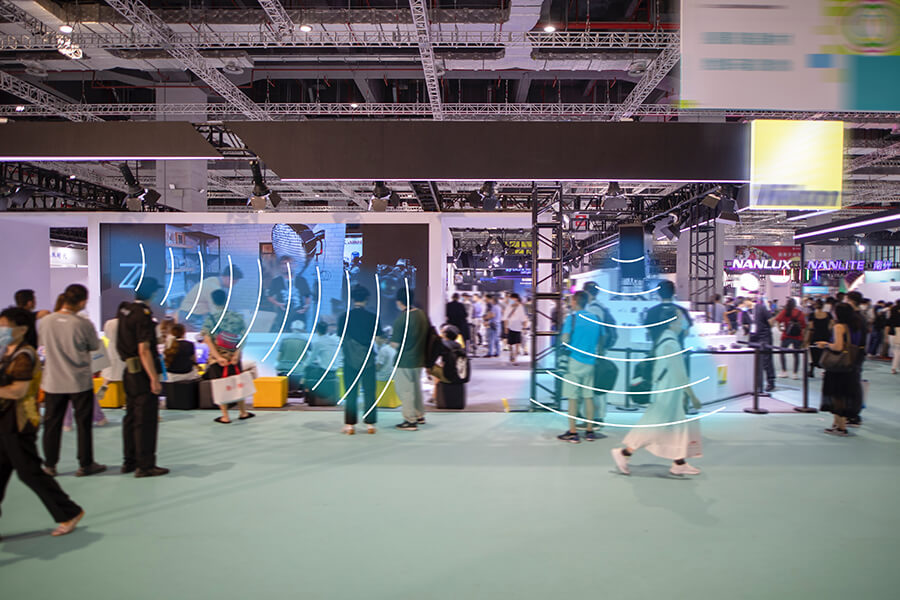
At trade shows and exhibitions, multiple displays may operate in the same area. Focused audio can help each display deliver its own audio content while reducing interference between neighboring exhibits.
Airports, transportation facilities, hospitals, and other public environments may require audio information in specific areas. Directional audio can be considered when conventional loudspeakers would unnecessarily increase sound levels in surrounding spaces.
Directional speakers can be used to create localized audio zones in classrooms, libraries, training areas, and interactive learning installations.
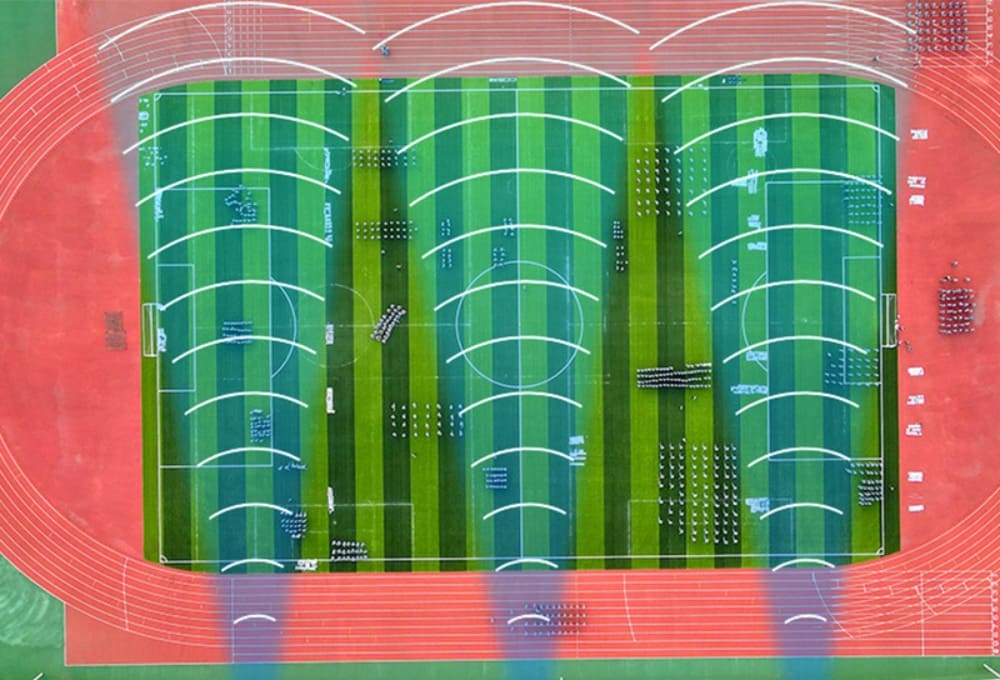
Directional speakers can also be used for selected outdoor or semi-outdoor applications. However, performance can be affected by environmental conditions, background noise, installation position, and reflective surfaces, so system selection and acoustic planning are important.
Audfly develops directional audio solutions for applications that require focused sound and controlled audio coverage. Different models are designed for different installation environments and project requirements.
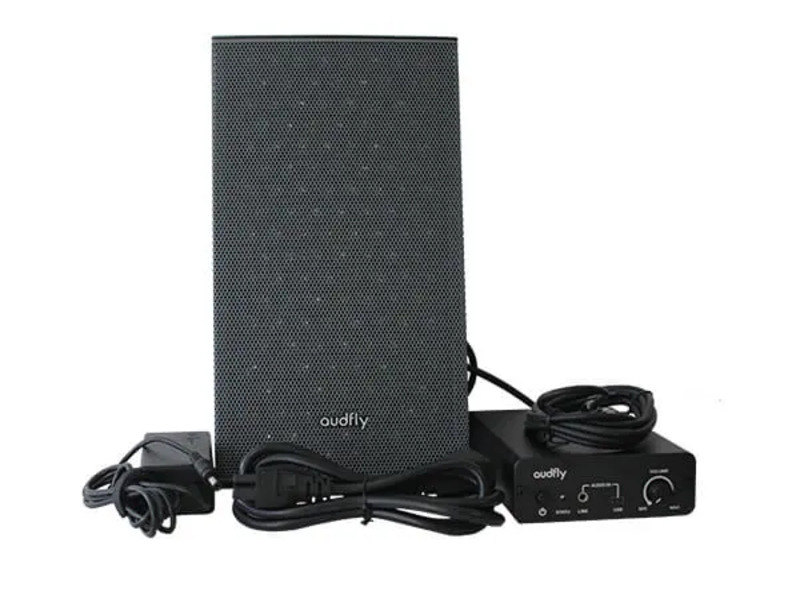
The Audfly Model B is a directional ultrasonic parametric speaker designed for applications such as museums, galleries, exhibitions, and other environments where localized audio is required.
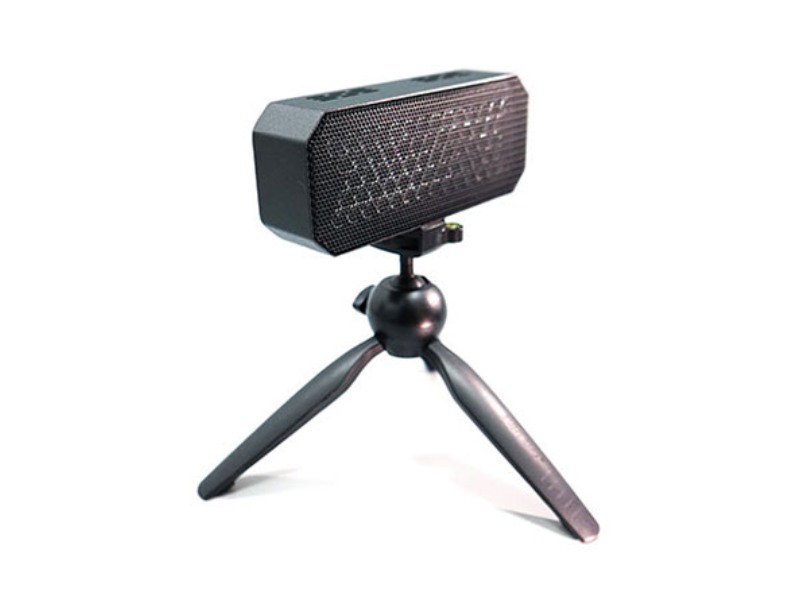
The Audfly Model Mini is a compact portable directional speaker designed for smaller-scale applications. Its compact form factor and Bluetooth connectivity make it suitable for selected indoor use cases.
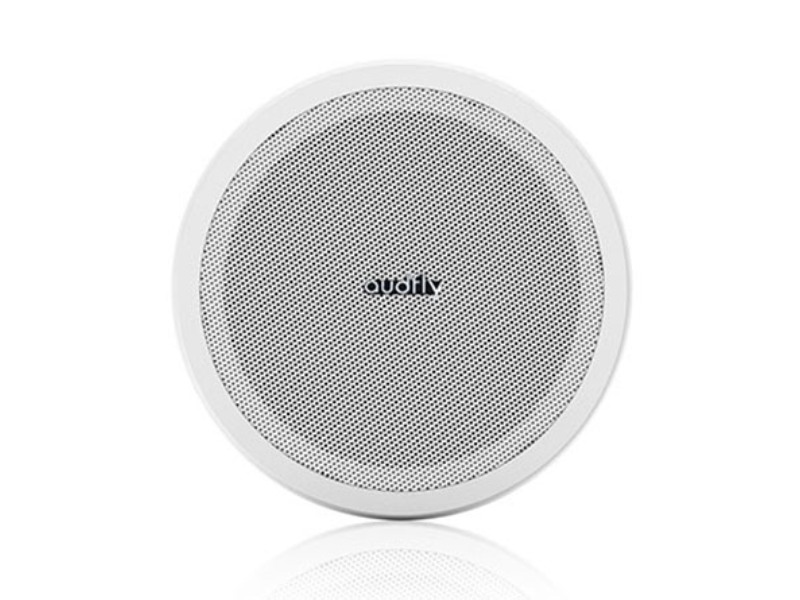
The Audfly Model L is a directional soundbar designed for applications requiring focused audio from a larger speaker format, including exhibitions, retail environments, and other indoor or semi-outdoor installations.
The most suitable model depends on factors such as listening distance, installation position, target coverage, ambient noise, and the required sound level. For project-based applications, a customized acoustic recommendation may be more appropriate than selecting a speaker based on size alone.
Selecting a directional speaker should start with the application and acoustic environment rather than the speaker model itself. Consider the following factors:
Determine whether the speaker will be used for museum exhibits, digital signage, retail displays, exhibitions, education, public information, or another application. Different scenarios may require different speaker designs.
Define the typical distance between the speaker and the listener. Effective performance depends on the speaker model, installation position, target sound level, and environmental conditions.
Consider how wide the intended listening zone should be. A narrower beam may be useful for highly targeted applications, while a wider directional pattern may be preferable when several people need to listen simultaneously.
Wall-mounted, ceiling-mounted, display-integrated, and portable installations may require different speaker formats. The mounting angle and height should also be considered during system planning.
Background noise, reflective surfaces, room geometry, and competing sound sources can all affect speech intelligibility and the perceived performance of a directional speaker.
For commercial projects, consider how the speaker will connect to the existing audio source, display, media player, control system, or other equipment.
For complex projects, providing the supplier with information about the application, installation height, listening distance, target area, and environmental conditions can help determine the appropriate directional audio solution.
Audio spotlight and directional speaker technology can provide excellent control over sound distribution, but it is not a universal replacement for conventional loudspeakers. Understanding its limitations is important when planning a system.
For this reason, the best directional audio system is the one that matches the acoustic requirements of the specific application rather than simply providing the narrowest possible sound beam.
An audio spotlight speaker is a highly directional audio system designed to deliver sound toward a specific listening area while reducing sound spill into surrounding spaces.
Many directional audio systems use acoustic beamforming or ultrasonic parametric technology to control the direction of sound. The exact operating principle depends on the speaker design.
Yes. An audio spotlight speaker is a type of highly directional audio speaker designed to focus sound toward a specific listening area. "Directional speaker" is the broader term used to describe speakers that control the direction and coverage of sound.
Parametric speakers are one important technology used to create highly directional sound. However, not every directional speaker necessarily uses the same technology.
Common applications include museums, galleries, exhibitions, digital signage, retail displays, kiosks, education, public facilities, and other environments requiring localized audio.
Directional speakers can reduce unwanted sound spill by concentrating audio toward a target area. They do not eliminate sound completely, and actual performance depends on the speaker, installation, environment, and listening position.
Consider the application, listening distance, target coverage area, installation position, background noise, acoustic environment, connectivity, and required sound level. For commercial projects, a supplier can recommend a suitable model based on these requirements.
Audio spotlight speakers provide a practical approach to localized audio delivery. By controlling the direction and coverage of sound, they can help create focused listening zones for museums, exhibitions, digital signage, retail displays, education, and other applications where conventional speakers may create excessive sound spill.
The right solution depends on more than simply choosing a highly directional speaker. Listening distance, beam width, installation position, background noise, room acoustics, and the intended application should all be considered during system design.
Tell us about your application, target listening distance, installation environment, and required coverage area. The Audfly team can help you evaluate a suitable directional audio solution for your project.


.png)
.png)





.png)
.png)
.png)


.png)


.png)