.png)
Tel: +86-13761027061

E-mail: contactus@audfly.com

.png)


.png)
Sound is one of the most underutilized tools in retail. Research shows that 41% of shoppers have made unplanned purchases after hearing in-store audio promotions, and stores with well-designed soundscapes see up to 10% longer dwell times. Yet most retailers still rely on basic overhead speakers that flood the entire space with the same audio. In this guide, we explore how directional speakers are changing the game — enabling retailers to deliver targeted sound to specific zones, reduce noise pollution, and create personalized shopping experiences that drive measurable sales growth. Whether you run a boutique, supermarket, or luxury flagship store, you will learn how to design and implement a sound strategy using ultrasonic directional speakers that actually works.
Sound does far more than fill silence — it actively shapes how customers feel, how long they stay, and whether they buy. A study published in the Journal of Business Research found that background music matching a store's brand identity increased purchase intent by up to 96% compared to mismatched or absent music. Another study by Mood Media revealed that 85% of international shoppers prefer visiting stores that play music, and nearly half say music makes them stay longer.
Here is how sound influences the retail experience on multiple levels:
However, sound is a double-edged sword. A 2019 survey by ServiceChannel found that 44% of shoppers would leave a store due to unpleasant or overly loud music. Noise pollution from overlapping audio zones, poorly timed announcements, and generic soundtracks can actively harm your bottom line. This is precisely why forward-thinking retailers are turning to directional speakers — to build clean, controlled soundscapes where every zone serves a specific purpose without bleeding into others.
The takeaway is clear: sound is not just ambiance — it is a measurable driver of revenue. But only when it is intentional, well-designed, and precisely delivered. In the following sections, we will show you exactly how to achieve this with directional speaker technology for retail environments.
Before comparing the two technologies, it helps to understand the fundamental problem with traditional speakers in a retail context. Conventional speakers radiate sound in all directions (omnidirectionally). In a small boutique, this might be acceptable. But in a department store, shopping mall, or multi-zone retail space, omnidirectional audio creates a cacophony of overlapping sounds — background music clashing with promotional announcements, product demos bleeding into quiet browsing zones. The result is noise pollution that degrades customer experience and can reduce sales.
Directional speakers solve this problem entirely. Here is how they compare:
| Aspect | Traditional Speakers | Directional Speakers |
|---|---|---|
| Sound Coverage | Omnidirectional; sound spreads across the space | Focused beam delivering sound precisely to the target area |
| Noise Pollution | High, often interferes with nearby areas | Minimal, clean and contained sound field |
| Customer Experience | Generic, same for all visitors | Personalized, immersive experience per zone |
| Energy Efficiency | Lower, power spread over large area | Higher, energy directed only where needed |
| Installation Flexibility | Requires acoustic treatment to control bleed | Compact, mountable on walls or ceilings with no acoustic treatment |
| Multi-zone Capability | Difficult without physical barriers | Easy — each speaker creates an independent audio zone |
Directional speakers work fundamentally differently from conventional speakers. Traditional speakers use a vibrating cone to push air outward, creating sound waves that radiate in all directions. Directional speakers — specifically ultrasonic directional speakers — use an array of ultrasonic transducers to emit modulated ultrasonic waves. These waves are inaudible on their own, but as they travel through the air, they self-demodulate and produce audible sound only within a narrow beam.
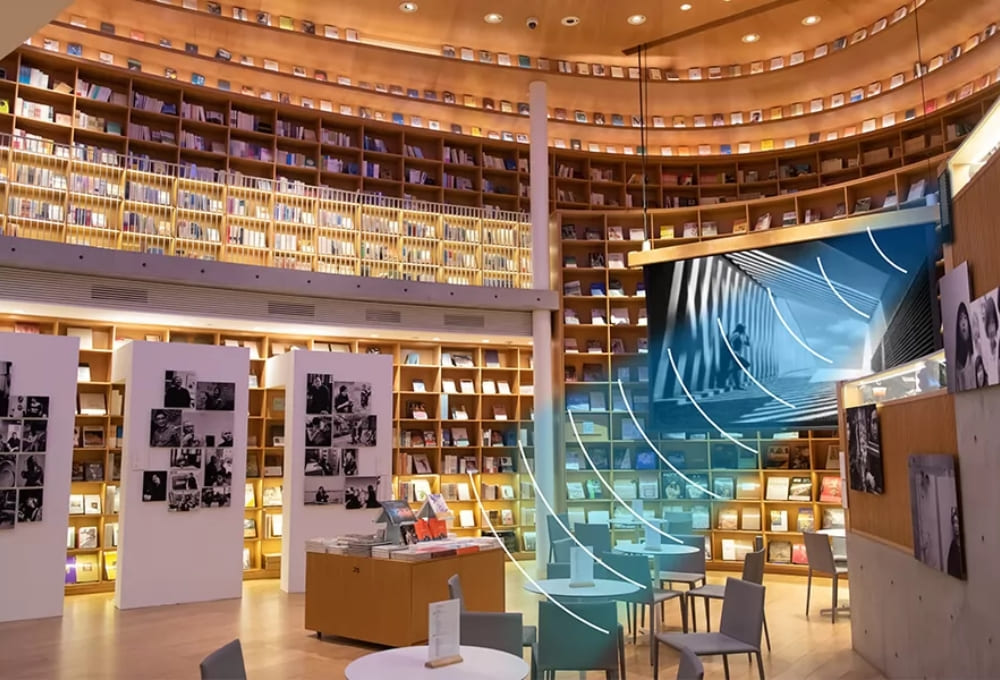
Think of it like a flashlight for sound: only the area "illuminated" by the beam hears the audio. Step outside the beam, and the sound virtually disappears. This property makes directional speakers uniquely suited for retail environments where you need multiple independent audio zones operating simultaneously — without walls or barriers between them.
Audfly's ultrasonic directional speakers use patented technology to achieve audio isolation that is up to 10 times more effective than any other speaker type on the market. The result is a shopping environment where each display, aisle, or zone can have its own dedicated soundscape — background music in the lifestyle section, product information at the electronics display, promotional announcements near the checkout — without any cross-contamination.
Sound is not just perceived by the ears — it triggers physiological responses throughout the body. Research in environmental psychology shows that certain frequencies and volumes directly influence heart rate, cortisol levels (a stress hormone), and dopamine release. In a retail context, this means the wrong sound can literally make customers feel stressed and rush toward the exit, while the right sound can put them in a relaxed, exploratory, purchase-ready state. A 2017 study by HUI Research in Sweden found that playing music aligned with a brand's identity in retail stores led to a 9.1% increase in sales compared to stores with no music strategy.
The relationship between music tempo and shopping behavior has been well-documented. Ronald Milliman's landmark research demonstrated that slow background music (below 72 BPM) resulted in shoppers moving more slowly through the store, spending 38% more time browsing and generating significantly higher per-visit revenue than stores playing fast-tempo music. Volume plays a similar role: moderate volume (around 70 dB) tends to be perceived as comfortable and inviting, while volumes above 85 dB cause listener fatigue and drive shoppers away. These insights are particularly relevant for luxury retail stores, where maintaining a calm, premium atmosphere is essential to the brand experience.
Most retail stores use a single background music system paired with overhead PA announcements. In smaller spaces, this approach works adequately. But as store layouts grow in complexity — with multiple departments, interactive displays, and self-service kiosks — a one-size-fits-all audio approach creates problems. Overlapping sound sources compete for customer attention, and employees are forced to endure repetitive audio loops all day, which hurts morale and service quality. A survey by Mood Media found that 72% of retail employees said inappropriate background noise negatively affected their performance. This is where the zoning capability of directional speakers becomes a strategic advantage — delivering the right audio to the right area, at the right moment, while keeping the rest of the store undisturbed.
Not all retail audio serves the same purpose. Understanding the different types — and where each belongs in your store — is the foundation of an effective sound strategy:
Ambient sound is the foundational layer of your store's audio environment. It includes background music, nature sounds, or curated playlists that establish the overall mood. For example, an outdoor clothing retailer might play gentle nature sounds in its hiking section, while a high-end cosmetics store might choose soft jazz. The key is consistency with brand identity — customers should "hear" your brand the moment they walk in, even if they can not consciously identify the music.
This is where directional speakers deliver the highest ROI. Targeted promotional audio includes product demonstrations, time-limited offers, and guided shopping messages that are delivered directly to shoppers in a specific zone. Unlike broadcast PA announcements that interrupt everyone, targeted audio reaches only the customers who are most likely to respond — those already standing near the relevant product. Research shows that this personalized approach is far more effective: directional audio promotions can increase product awareness by up to 65% compared to store-wide announcements.
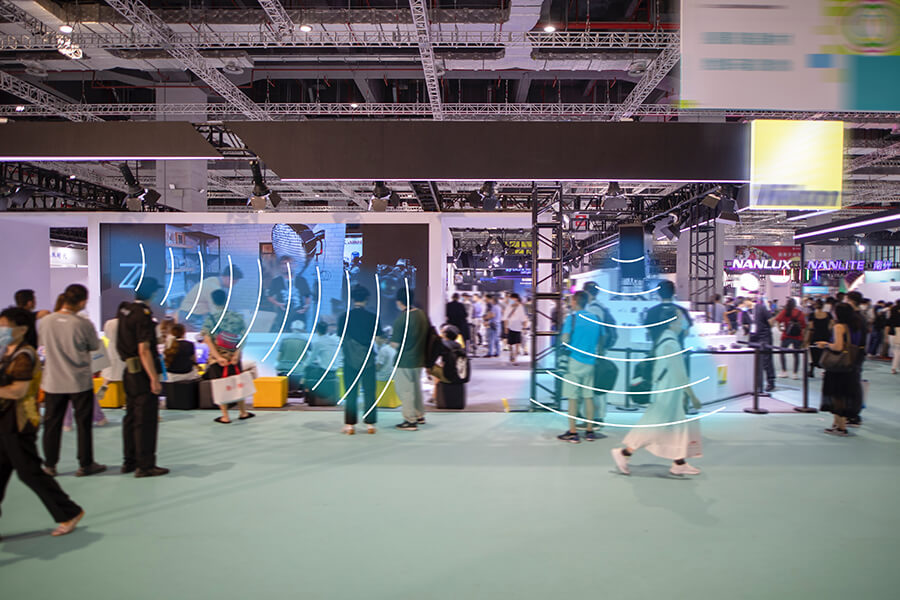
A newer application of directional sound is audio-based wayfinding — using focused sound beams to subtly guide customers through the store. When a shopper walks into the beam of a directional speaker, the unexpected localized sound naturally draws their attention and curiosity, often prompting them to look around and discover nearby displays. This technique is particularly powerful in large department stores and trade shows, where directing foot traffic to undervisited zones can significantly boost overall sales per square meter.
Directional speakers — also called parametric speakers or ultrasonic speakers — use an array of ultrasonic emitters to project modulated sound waves in a narrow, focused beam. The core principle is called the "parametric array effect": when two ultrasonic waves at slightly different frequencies travel through the air together, their nonlinear interaction generates audible sound at the difference frequency. Because ultrasonic waves are highly directional by nature (due to their short wavelength), the resulting audible sound inherits this directionality, traveling in a tight beam rather than spreading outward.
Audfly's directional speaker products leverage this technology with 177 core patents, achieving precise beam control that allows retailers to define exact listening zones as small as 1 to 2 square meters — even in open environments with no physical barriers.
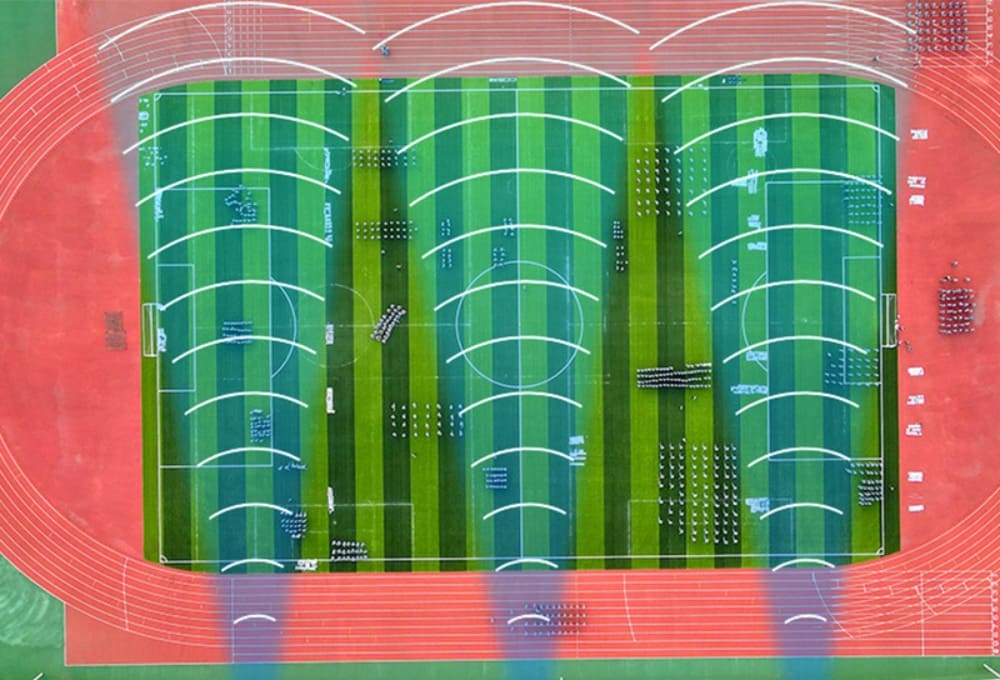
The defining advantage of directional speakers is their ability to confine audio to a specific area. In a real-world retail setting, this means you can play a product demo video with audio at one display, a seasonal promotion at another display 3 meters away, and have complete silence in between. No bleed, no interference, no competing messages. This precision is impossible with traditional speakers, regardless of volume or placement.
Noise pollution is a hidden cost in retail. Excessive or repetitive sound causes customer fatigue (shorter visits, lower spending) and employee burnout (lower service quality, higher turnover). By replacing broadcast audio with targeted delivery, directional speakers can reduce overall ambient noise levels in a store by 30-50%, creating a calmer environment that benefits everyone.
When a customer walks into a directional speaker's beam, the sound seems to appear out of nowhere — as if the product itself is speaking to them. This creates a memorable, almost magical moment that customers often share with friends or on social media. It is a form of experiential marketing that builds brand affinity and word-of-mouth far more effectively than a generic PA announcement.
One of the most compelling examples of directional speakers driving retail results comes from KFC China. In late 2019, KFC introduced a new generation of automated ice cream vending machines in select Shanghai stores. These machines featured eye-catching blue and white designs, robotic arms, touch screens, and integrated audio-visual elements that quickly attracted a steady stream of customers.
The original machines included only a small built-in speaker to guide purchases via the touch screen. However, a problem emerged: after customers placed their orders, the ice cream production process created a 60-90 second waiting period. During this time, customers became disengaged, and some walked away or felt uncertain about whether the machine was working correctly. This waiting gap risked reducing repeat purchases and overall customer satisfaction.
To solve this, Yum China (KFC's parent company in China) partnered with Audfly Technology to design a targeted audio solution. The collaboration addressed several challenges simultaneously:
After field testing across multiple KFC locations in Shanghai, Audfly integrated its Model L Acoustic Directional Speaker on top of the ice cream machines. The speaker was linked with the machine's existing audio-visual system to provide synchronized, targeted audio — including playful animations and promotional messages — that played exclusively for the customer standing in front of the machine. Nearby diners were completely undisturbed. The result was improved customer engagement during the wait, stronger purchase completion rates, and a seamless in-store experience that aligned with KFC's premium branding for the new machines.
Before purchasing any equipment, start by defining your audio objectives. Ask yourself: What do I want sound to accomplish in my store? Common objectives include increasing dwell time in high-margin departments, promoting seasonal offers without broadcast interruptions, improving the self-service experience at kiosks or interactive displays, and reinforcing brand identity through consistent sonic branding. Write down 3-5 specific, measurable goals — for example, "increase average dwell time in the premium skincare section by 15%" or "reduce PA-related customer complaints to zero." These goals will guide every subsequent decision, from speaker model selection to content creation.
Conduct a walk-through of your retail space with a sound meter (a free smartphone app like NIOSH SLM works for initial assessments). Map the existing noise levels in each zone, noting areas of high ambient noise (near entrances, HVAC systems, or busy registers) and quiet zones (fitting rooms, premium displays). Identify problem areas where competing audio sources create confusion, and note high-traffic paths where targeted promotions would have the most impact. This assessment forms the basis of your sound map.
A sound map is a floor plan overlay that defines where each type of audio will be delivered. For each zone, specify the audio type (ambient music, targeted promotion, wayfinding cue, or silence), the directional speaker model to be used, the content to be played, and the hours of operation. Consider customer traffic flow — place high-impact promotional audio along the natural walking path, not in dead-end aisles. And always include "silence zones" (like fitting rooms and checkout queues) where no directed audio plays, giving customers mental breathing room.
Installation of directional speakers is straightforward compared to traditional sound systems. Most Audfly models support wall mounting, ceiling mounting, and suspended installation, requiring only a power source and an audio signal (via 3.5mm, RCA, or Bluetooth depending on the model). Key placement principles include: mount the speaker 2-3 meters above the target listening area for optimal beam coverage; angle the speaker toward the listener, not the product (the sound should reach the customer's ear level); avoid mounting directly above highly reflective surfaces like glass or polished stone, which can cause unwanted sound reflections. For complex installations involving 5+ speakers, we recommend working with Audfly's technical team for a professional site assessment — contact us for free consultation.
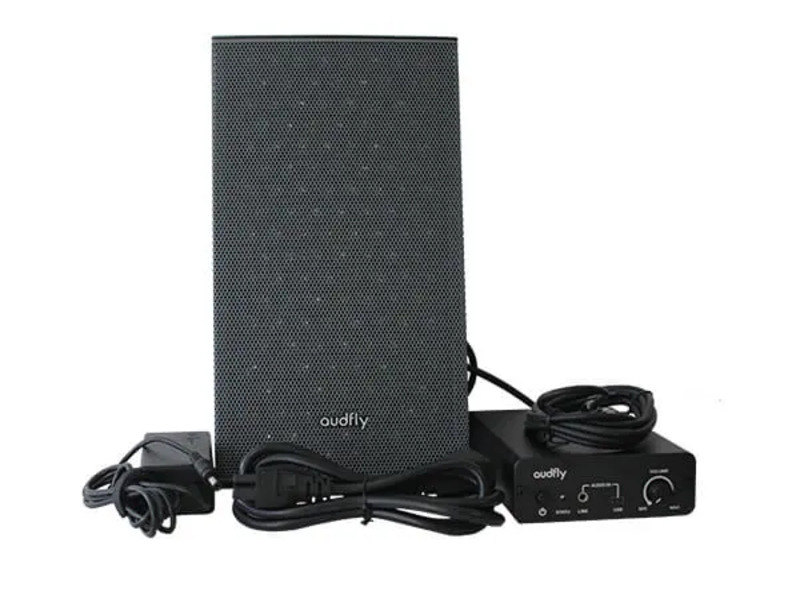
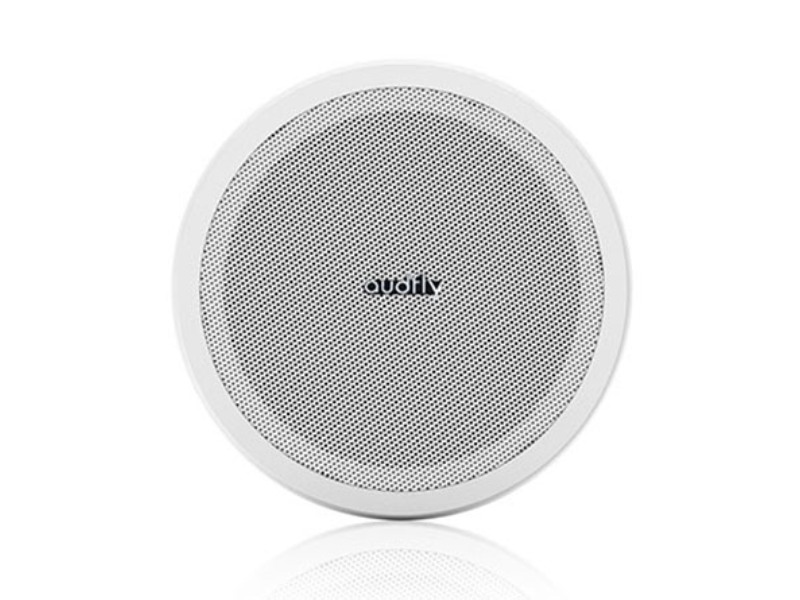
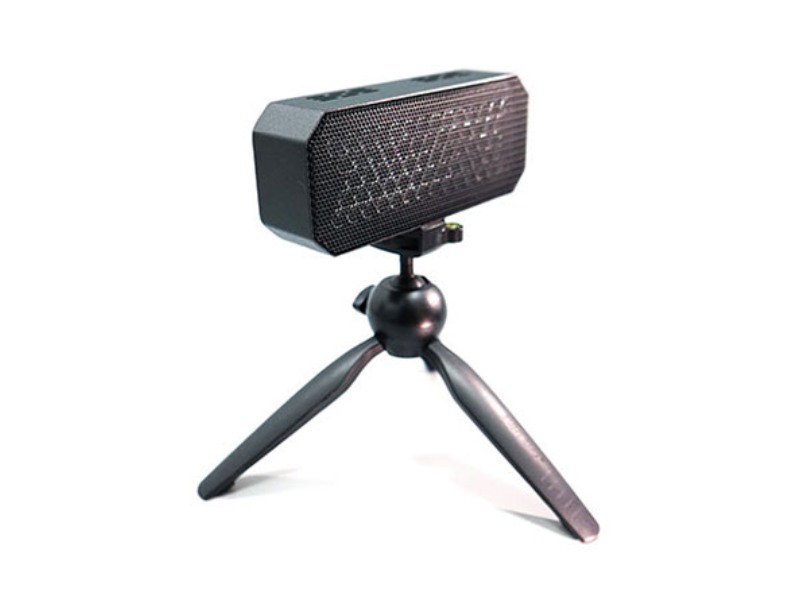
The right speaker depends on your store layout and use case:
Directional speakers do not replace your existing background music system — they complement it. The best retail audio environments use a layered approach: a traditional system provides the base layer of ambient music throughout the store, while directional speakers add targeted audio on top for specific zones. When integrating, ensure that the volume of your directional speakers is set 3-5 dB above the ambient noise level in that zone — loud enough to be clearly heard by the target listener, but not so loud that it leaks beyond the intended beam. Test the integration during both peak and off-peak hours, as ambient noise levels can vary significantly.
The most expensive directional speaker system in the world will fail if the content is poor. Effective directional audio content follows a simple formula: keep it short (15-30 seconds per message), make it relevant (product-specific, not generic), and include a clear call to action ("Try our new seasonal flavor — press the button to order"). Avoid playing the same message on a continuous loop, as this causes both customer and employee fatigue. Instead, create 4-6 variations and rotate them throughout the day. For ambient sound zones, curate playlists that match the energy of the department — upbeat for sportswear, calm for home furnishings, sophisticated for luxury goods.
When choosing music for retail, match the tempo to the desired customer behavior. Use 60-80 BPM for sections where you want customers to slow down and explore (premium products, new arrivals). Use 100-120 BPM for sections where you want energy and quick decisions (clearance racks, impulse buys near checkout). Always ensure you have proper licensing for any music played in a commercial setting — services like Soundtrack Your Brand and Cloud Cover Music offer retail-specific licensed playlists. For directional speaker zones, consider using non-musical audio such as product sounds (the sizzle of a steak for kitchenware, ocean waves for swimwear) to create immersive, memorable experiences.
Branded audio messages delivered through directional speakers should feel like a personal recommendation, not a broadcast announcement. Use a warm, conversational tone rather than a "sales voice." Record professionally — poor audio quality undermines the premium feel that directional sound technology provides. Update messages at least monthly to keep content fresh, and align them with in-store visual merchandising. For example, if your visual display features a new collection, the directional speaker at that display should complement it with audio about the collection's story, materials, or styling tips.
Sound strategy is not set-and-forget. The best retailers adjust their audio throughout the day. Morning hours (lower traffic) might feature softer ambient sounds and fewer promotional messages. Peak afternoon hours can increase the frequency of directional promotions at high-traffic displays. Evening hours might shift toward a more relaxed, closing-time atmosphere. Many modern directional speaker systems, including Audfly's, support scheduled playback through connected software, making it easy to automate these transitions without manual intervention.
The global directional speaker market is projected to grow at a CAGR of over 8% through 2033, driven largely by retail adoption. This is not a niche experiment — it is a proven technology being deployed by major brands including KFC, AT&T, Nivea, and Adidas to create more engaging, more profitable retail environments.
Whether you are looking to boost sales at specific displays, reduce noise complaints from employees, or create a premium brand experience that competitors cannot match, directional speakers offer a measurable return on investment. Audfly, with over 350 intellectual property rights, 177 core patents, and installations across the US, UK, France, Australia, India, Canada, and the UAE, is the global leader in directional audio solutions for retail. Visit audflyspeaker.com to explore our full product line, or contact our team for a free consultation tailored to your store's specific needs.
Directional speakers use ultrasonic transducer arrays to project sound in a narrow, focused beam — similar to how a flashlight focuses light. Only people standing within the beam can hear the audio; step 1-2 meters outside it, and the sound becomes inaudible. Traditional speakers, by contrast, radiate sound omnidirectionally, filling the entire room with the same audio. In a retail setting, this means directional speakers can create independent audio zones for different product displays, promotions, or departments — all operating simultaneously without any interference. This is impossible with traditional speaker setups unless you build physical walls between zones.
Directional speaker pricing varies by model and project scope. Audfly's retail-grade models typically range from several hundred to a few thousand dollars per unit, depending on specifications and installation requirements. The ROI can be significant: retailers report increased dwell time at targeted displays, higher conversion rates on promoted products, and reduced employee turnover due to lower noise stress. One industry study found that 41% of shoppers made unplanned purchases after hearing targeted in-store audio — suggesting that even a single directional speaker positioned at a high-margin display could pay for itself within weeks. Contact Audfly for a customized quote based on your store layout and objectives.
Three factors matter most. First, mounting height and angle — the speaker should be positioned 2-3 meters above the target area, angled downward toward the listener's ear level. Second, surface materials — highly reflective surfaces like glass, tile, or polished stone can cause sound reflections that widen the beam; in these environments, adjusting the speaker angle or using sound-absorbing materials nearby can help. Third, content planning — decide what each speaker will play before installation, not after. This ensures optimal placement aligned with your merchandising strategy. Audfly's technical team provides free site assessment support for multi-speaker installations.
Yes — directional speakers have been successfully deployed in environments ranging from small luxury boutiques (using a single Audfly Model B at a featured display) to large supermarket chains (using multiple ceiling-mounted Model R units across departments). They also work well in shopping malls, trade shows, pop-up stores, and self-service kiosk environments. The key is matching the right speaker model to your specific layout, ceiling height, and ambient noise conditions. For non-standard applications, Audfly also offers customized directional audio modules designed to your exact size, shape, and acoustic specifications.
Start with your objectives: are you trying to promote a specific product, enhance the atmosphere, or guide customer flow? For promotional content, keep messages under 30 seconds with a clear call to action, and rotate 4-6 variations to avoid listener fatigue. For atmospheric content, curate playlists or ambient sounds that match the emotional tone of the zone (calm for luxury, energetic for sportswear). Update all content at least monthly to stay fresh and aligned with current merchandising. Most importantly, test your content with real customers — observe their behavior (do they stop, look, engage?) and refine based on what you see. Audfly provides content strategy guidance as part of its retail audio solutions service.
Sound is not merely background noise — it is a strategic tool that directly influences customer behavior, dwell time, and purchase decisions. Throughout this guide, we have explored the science behind retail audio, the limitations of traditional omnidirectional speakers, and the unique advantages of directional speaker technology. From increasing unplanned purchases by 41% to extending customer dwell time by 10%, the data makes a compelling case for investing in targeted audio solutions.
Directional speakers solve the core problem of modern retail sound design: delivering the right audio to the right person at the right time, without creating noise pollution or overwhelming your store environment. Whether you operate a single boutique or a nationwide retail chain, implementing a directional sound strategy can help you create memorable brand experiences, promote high-margin products more effectively, and build a shopping environment that customers genuinely enjoy.
Ready to bring directional sound to your retail space? Explore Audfly's directional speaker product range or contact our team for a free consultation and site assessment tailored to your store layout and audio objectives.


.png)
.png)





.png)
.png)
.png)


.png)


.png)