home
/

How Do Directional Loudspeakers Transmit Sound in a Directional Manner

Noise pollution is pervasive in modern life — ambient chatter, overlapping audio sources, public announcements, and background music. Excessive or poorly managed sound causes irritability, distraction, insomnia, and cognitive fatigue. Directional audio offers a different approach: instead of flooding whole spaces with sound, direct sound only at intended listeners. Since early 2015, Audfly has pioneered directional audio solutions that send sound in narrow, controlled beams — like a flashlight of audio — so only a targeted listening area hears the audio.


What Is Directional Audio?

Traditional loudspeakers emit audio waves that propagate outward in many directions, causing sound to disperse and often reach unintended listeners. Directional audio technology instead allows sound to propagate preferentially in a narrow, defined beam — the effect is similar to steering a spotlight of sound. With a directional speaker, you define who hears what and where.

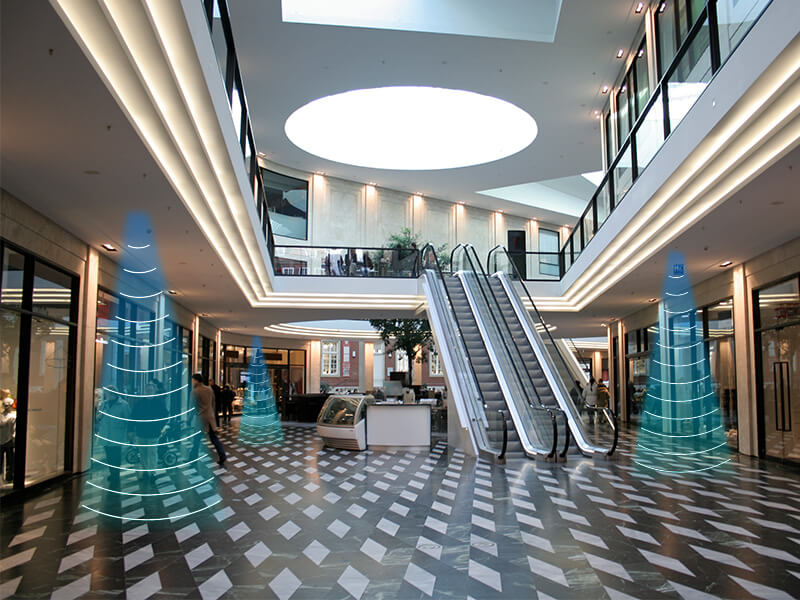
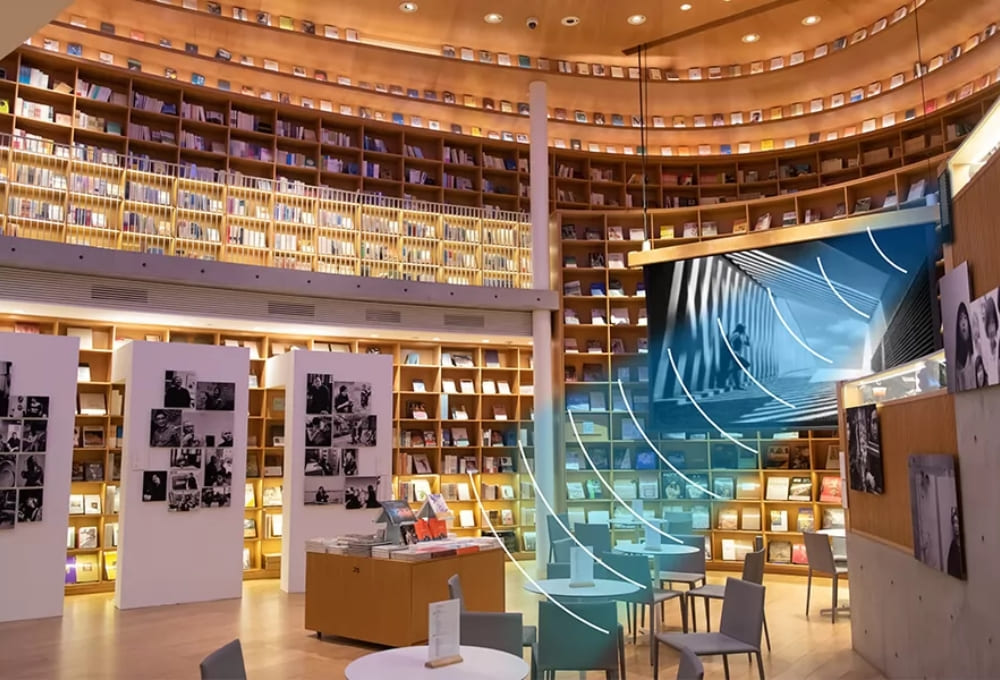
Directional speakers create "sound zones" or "audio bubbles": discrete areas where sound is clearly heard while the surrounding environment remains quiet. This enables scenarios such as a person watching television without disturbing a nearby family member studying, targeted narration in museums, or promotional audio directed only at shoppers standing near a display.


How Directional Speakers Work

Many directional speakers use a technique commonly referred to as a parametric array combined with signal-processing and beam-control algorithms. The process can be summarized in four simplified steps:

  1. Ultrasonic carrier and modulation: The audible audio signal is modulated onto an ultrasonic carrier wave. Ultrasonic frequencies propagate with strong directionality.
  2. Non-linear demodulation in air: Non-linear interactions in the air demodulate the ultrasonic beam as it travels, reconstructing the audible sound only along the beam's path.
  3. Beam shaping and directivity control: Through speaker geometry and signal processing, the device focuses sound into a tight angle, creating a precise target zone.
  4. Reflection and virtual sources: When the beam reflects off surfaces, it can create virtual sound sources that allow flexible spatial setups while maintaining some directivity.

The result: audible sound that remains localized and clear even in noisy or open environments, with minimal spill-over into adjacent areas.


About Audfly

Audfly Technology, founded in the mid-2010s and based in China, is a leading enterprise in acoustic innovation and a global provider of directed audio solutions. Audfly has specialized in the research, manufacture, and installation of directional speakers for major corporations and industries around the world.

Audfly's core technology suite — often represented by its directional audio product lines — includes innovations in parametric directional sound, sound imaging, active noise control, and modular directional audio components. The company offers indoor and outdoor directional speakers, modular audio modules for integration into displays or kiosks, and customizable hardware tailored to project requirements.


Applications & Use Cases

Directional audio offers tangible benefits across a wide variety of environments. Typical applications include:

  • Museums & Exhibitions: Deliver narration or sound effects only to visitors standing directly in front of exhibits, preventing audio overlap and preserving quiet gallery spaces.
  • Retail & Showrooms: Target promotional audio or immersive product audio to specific display points without overwhelming the entire store.
  • Public Spaces & Outdoor Advertising: Provide targeted announcements or ads to passersby while limiting environmental noise in the surrounding area.
  • Libraries, Offices & Shared Living Spaces: Provide localized audio privacy and maintain comfortable, quiet environments for others.
  • Interactive Kiosks & Digital Signage: Add localized audio to self-service terminals, wayfinding displays, or interactive installations without adding to background noise.

Recommanded Directional Speaker

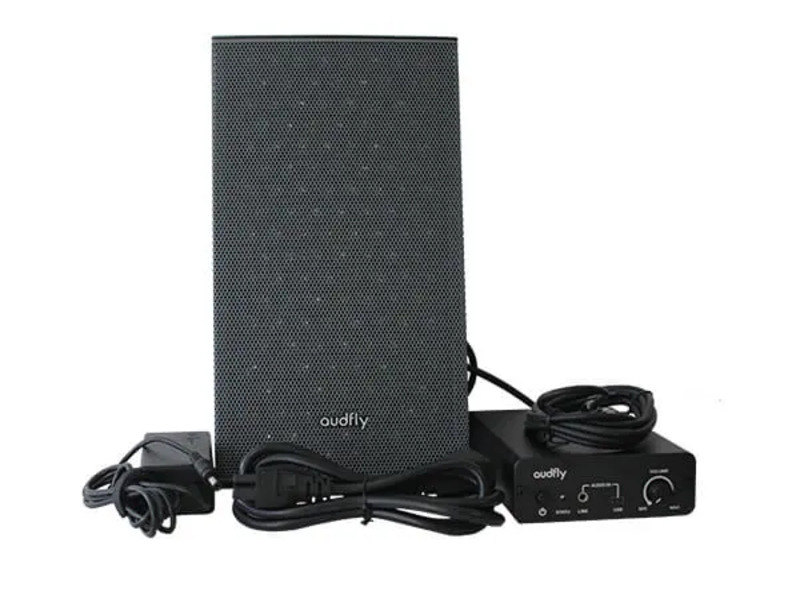
Directional Speakers Model B

This is a brief product description that introduces the key selling points and features of the product.

Model FSC5-B2-G
Maximum SPL 83±3dB@2m/1KHz
Directivity <15°(-20dB)
Frequency Range 500Hz-20kHz
Rated power 20W


Benefits & Impact

Adopting directional audio produces several important benefits:

  • Reduced noise pollution: Sound confined to designated zones minimizes disturbance and noise spill-over.
  • Improved clarity and intelligibility: Targeted audio improves comprehension for announcements, narration, or informational content even in noisy settings.
  • Audio privacy without headphones: Individuals receive personal audio streams without isolating them with earbuds.
  • Flexible spatial design: Installers can define the size, shape and position of sound zones to suit creative or functional needs.
  • Better experience in sensitive environments: Hospitals, libraries, museums, and residential buildings benefit from considerate sound design.


Audfly's Product & Solution Portfolio

Audfly offers a broad portfolio that addresses both small-scale and large-scale needs:

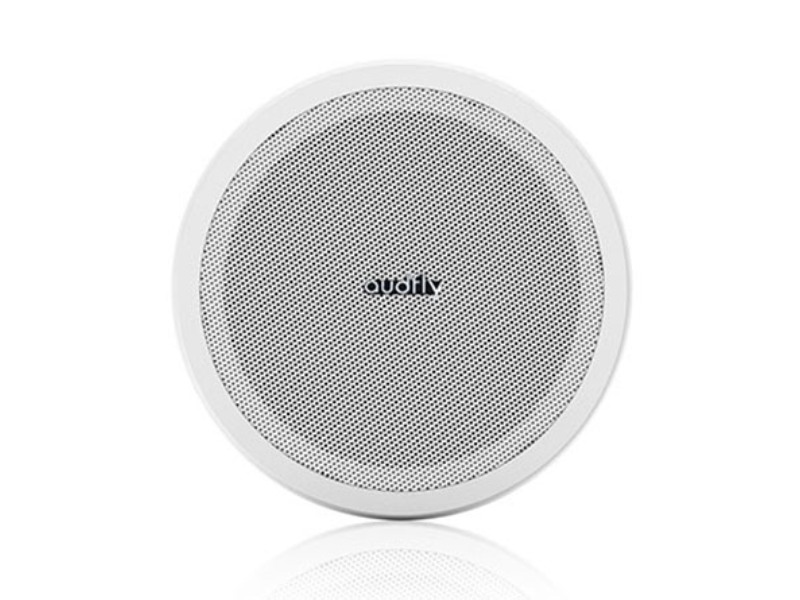
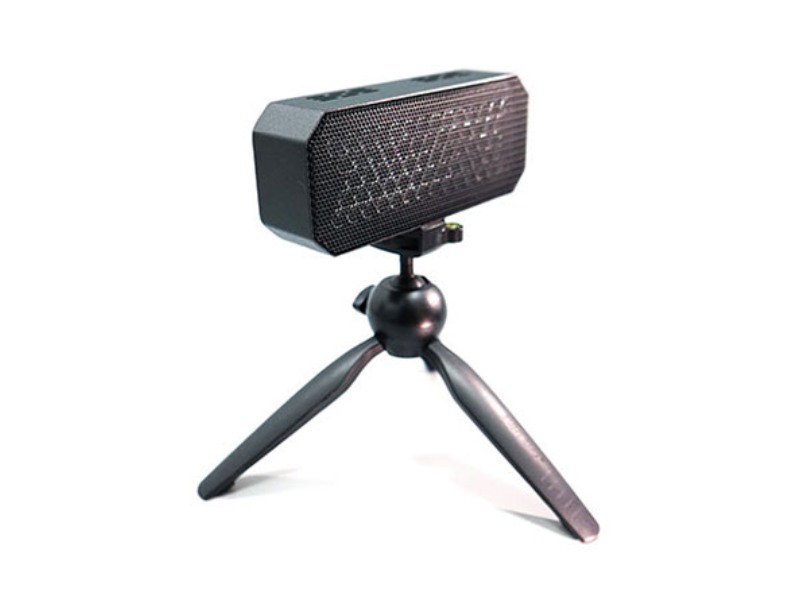
  • Indoor directional speaker models — compact units and strip/cube designs for displays, kiosks, or focused indoor deployments.
  • Outdoor directional systems — weather-resistant, long-range models built for plazas, billboards, and noisy outdoor settings.
  • Modular audio components — directional modules designed for integration into monitors, kiosks, and custom hardware.
  • Customization services — tailored sizes, colors, and acoustic specifications for architectural integration or bespoke installations.
  • Advanced acoustic features — sound imaging, active noise control, and system-level integration that expand use-case possibilities.

Directional Speakers Model X2

Click Here to Read More

Outdoor Directional Sound Systems Model YS-V112CH

Click Here to Read More

Array Loudspeaker EA15

Click Here to Read More


Practical Considerations & Best Practices

When planning a directional audio installation, consider the following:

  • Target area geometry: Directionality works best when the installation considers the distance, beam angle, and listener position.
  • Reflective surfaces: Reflections can be used for creative placement but can also alter perceived audio localization; plan surfaces thoughtfully.
  • Environmental noise: Outdoor or high-noise areas may require higher output or specific models designed for long-distance propagation.
  • Integration needs: For digital signage or kiosks, modular components and customization simplify embedding directional audio directly into products.
  • Regulatory and local considerations: Although directional audio reduces noise footprint, projects should still respect local regulations and public comfort.


Conclusion

Directional audio shifts the paradigm from "sound everywhere" to "sound where needed." Audfly's directional speakers and related acoustic innovations make it possible to deliver immersive, private, and highly intelligible audio to targeted listeners — while significantly lowering unwanted noise spill-over. From museums and retail environments to outdoor advertising and public spaces, directional audio provides practical, real-world benefits by improving clarity, preserving quiet spaces, and creating richer localized audio experiences.

If you plan an installation that requires targeted audio, consider the geometry of the listening area, environmental noise, and whether integrated or custom solutions are needed. Audfly's portfolio offers flexible indoor and outdoor models, modular components, and customization options that suit many professional projects.

Audfly Best-Selling Product Recommendations

Latest News & Blogs
Document
Blog,Directional Sound System Company - Audfly
Enter your inquiry details, we will reply you in 24 hours.
Send