.png)
Tel: +86-13761027061

E-mail: contactus@audfly.com

.png)


.png)
Directional audio is an innovative sound technology that focuses audio into a specific listening area instead of spreading sound in all directions like traditional speakers. By creating precise sound zones, directional audio systems allow listeners to hear clear audio while minimizing noise spillover to surrounding spaces.
Today, directional audio technology is widely used in museums, retail displays, digital signage, exhibitions, self-service kiosks, and other public environments where focused sound delivery is required. In this guide, you'll learn what directional audio is, how it works, the different types of directional audio speakers, and the real-world applications of this rapidly growing technology.
Directional audio speakers are at the forefront of audio technology, revolutionizing how we experience sound. Unlike traditional speakers that disperse sound in multiple directions, directional audio speakers focus sound into a tight beam. This targeted approach allows for a more personal and immersive listening experience, making them ideal for both private and public spaces where specific audio targeting is essential.
The magic of directional audio technology lies in its ability to create sound beams. This is achieved through the use of ultrasonic transducers or phased arrays, which manipulate sound waves to travel in a specific direction. By focusing sound waves, these speakers can deliver audio to a precise location. This technology not only enhances the listener's experience but also minimizes noise pollution in surrounding areas.
When compared to traditional audio systems, directional audio speakers offer a unique set of advantages. The sound emitted by traditional speaker systems tends to disperse in all directions, often causing noise pollution in the surrounding environment. Directional audio, on the other hand, delivers clear, focused sound to a specific area, providing an unparalleled clarity and concentration of audio content. Don't worry about the sound causing noise pollution to the surrounding environment.
Parametric speakers stand out in the realm of directional audio technology due to their precise sound targeting. These speakers use ultrasonic waves, which are modulated to create audible sound only when they reach a specific point. This results in a highly focused beam of sound, ideal for scenarios where audio needs to be confined to a small area, such as in museums or for targeted advertising. The precision of parametric speakers ensures that sound is delivered directly to the intended listener without spillover, maintaining both clarity and privacy.
Beamforming speakers represent a significant advancement in directional audio systems. This technology involves the use of multiple speakers working in tandem to control the direction of sound waves. By adjusting the phase and amplitude of each speaker, beamforming systems can steer sound precisely to where it's needed. This method is highly effective in creating zones of sound in open spaces, making it suitable for applications in offices, retail environments, or any location where specific sound targeting is required.
Sound Shower speakers take directional audio technology to public spaces, creating immersive auditory experiences without the need for headphones. These speakers, often installed overhead, shower a specific area with sound, allowing for a personal listening experience even in a crowded room. Whether it's providing information at an exhibit or enhancing customer experience in a retail setting, Sound Shower speakers offer a unique way to engage with audiences without disturbing the surrounding environment.
In the realm of home entertainment, directional audio speakers are game-changers. They provide a deeply personal listening experience without the need for headphones. Imagine watching a movie or playing a video game where the sound effects are directed precisely to your seating position, creating an immersive atmosphere that traditional audio systems can't match. This targeted approach also means family members can enjoy different audio experiences in the same room without disturbing each other.
In retail and advertising, directional audio technology opens up new avenues for engaging with customers. By directing specific messages and music to designated areas, stores can create a more personalized shopping experience. This technology of directional sound transmission ensures that promotional messages reach the correct audience, improving marketing effectiveness while minimizing noise pollution and auditory disruption to adjacent areas.
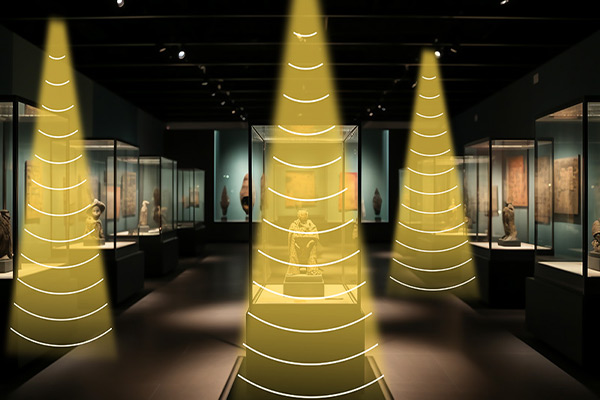
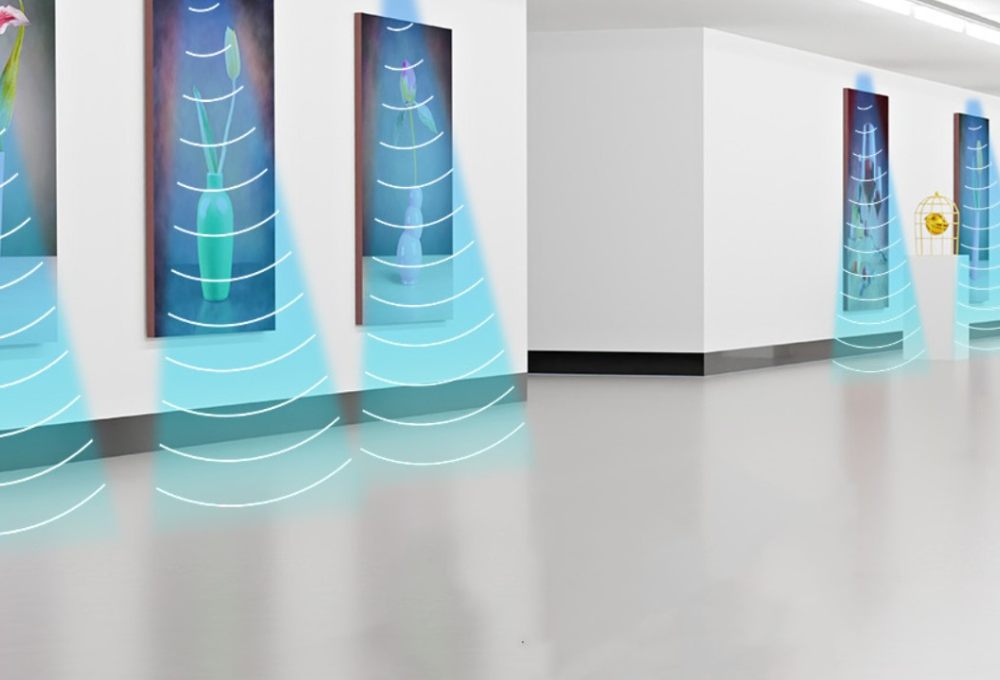
Museums and galleries benefit immensely from directional audio speakers. The directional speaker system can provide different explanation voices for visitors in different exhibition areas. The explanation voices in each exhibition area are independent of each other and do not interfere with each other. They will not be interfered by complex background sounds, and the sound can still be clearly transmitted to visitors in the target area. , and the sound of the audio explanation will not disturb visitors in other exhibition areas, which greatly improves the listening experience of visitors.
Learn more about museum directional audio solutions.
In the medical industry, Directional audio speakers play a vital role. By installing directional sound-emitting devices in different areas, sound can be spread within designated areas without disturbing other areas. The personal privacy of users is protected to a certain extent.
Directional audio helps digital signage attract attention while preventing sound from spreading into surrounding areas.
Exhibitors use directional audio to deliver product information directly to visitors without interfering with neighboring booths.
Kiosks can provide voice instructions and multimedia content while maintaining user privacy and reducing ambient noise.
See how Audfly directional audio solutions are used in real-world projects → View More Case Studies
Choose ceiling-mounted, wall-mounted, desktop, or integrated directional speakers based on your installation requirements.
Different directional speakers are designed for different listening distances, ranging from personal audio zones to larger public spaces.
Museums, retail stores, exhibitions, digital signage, and kiosks all require different directional audio solutions.
The Model L directional loudspeaker features a sleek strip-type design.
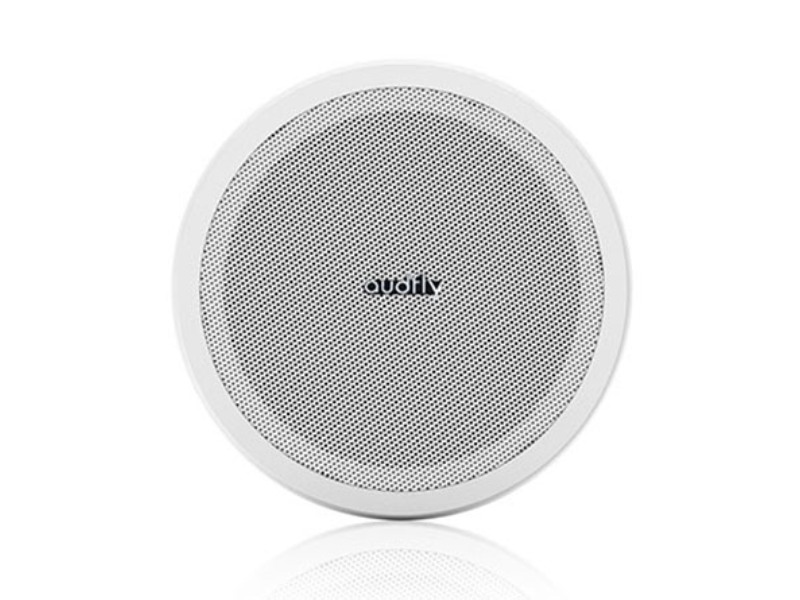
View Details →Audfly Model R directional loudspeakers are meticulously crafted for ceiling scenarios.
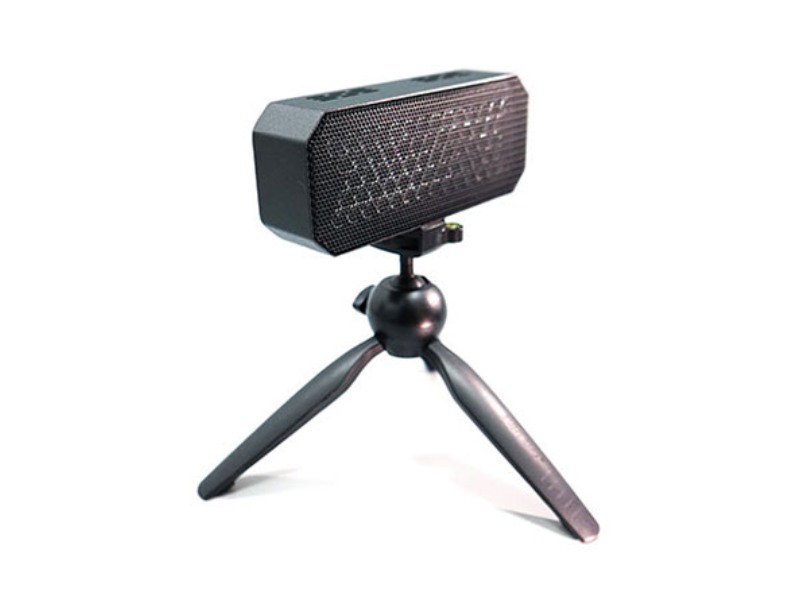
View Details →With a compact length of about 17cm and a lightweight design, weighing approximately 350g.
View Details →Proper installation is critical for maximizing the impact of directional audio technology. This involves strategically placing speakers at the right height and angle to ensure the sound is focused precisely where it's intended. Avoiding obstructions and reflecting surfaces is also important to maintain sound clarity. Furthermore, considering the acoustics of the room and potential interference from other audio sources is essential for optimal performance.
Integrating directional audio speakers into various environments requires a tailored approach. In a home setting, the focus is on enhancing the personal audio experience without disrupting the aesthetic of the living space. In commercial settings, such as retail or museums, the installation should aim at enhancing customer experience while maintaining the decorum of the environment. In sensitive environments like healthcare facilities, the installation should prioritize patient comfort and privacy.
The frequency range of directional audio speakers is a critical factor in determining sound quality. These speakers typically excel in delivering clear, crisp high frequencies, essential for directional sound. However, balancing these with adequate mid and low frequencies ensures a full-bodied audio experience. The precision in frequency response not only affects the clarity of the sound but also how well it can be directed to a specific area.
When considering directional audio technology, it's essential to understand its power requirements and energy efficiency. These speakers are often more energy-efficient than traditional systems, as they focus sound in a specific direction, reducing the need for high volume levels. Ensuring your setup is energy efficient not only lowers operational costs but also contributes to environmental sustainability.
The durability and maintenance of directional audio speakers are key to their long-term performance. These speakers are generally built to withstand regular use, but like all electronic devices, they require proper care. Regular maintenance, including cleaning and checking for software updates, is crucial. Additionally, understanding the environmental factors that could affect the speakers, such as humidity and temperature, will help in maintaining their longevity and performance quality.
Selecting the right directional audio speaker can be a game-changer for your audio experience. Whether you're looking to enhance your home entertainment system, create an immersive retail environment, or require precision audio delivery in a museum or healthcare setting, understanding what to look for is key. Here’s a guide to help you make an informed decision:
First, consider the primary use of the directional speaker. Different environments and applications require varying sound qualities, ranges, and directionality. For instance, a home entertainment system might prioritize immersive sound quality, while a museum might need precise sound targeting without spill-over.
Look into the technical specifications of the speaker. Key factors include frequency range, power consumption, and the size of the sound beam. A broader frequency range typically offers better sound quality, while lower power consumption can be more cost-effective and environmentally friendly.
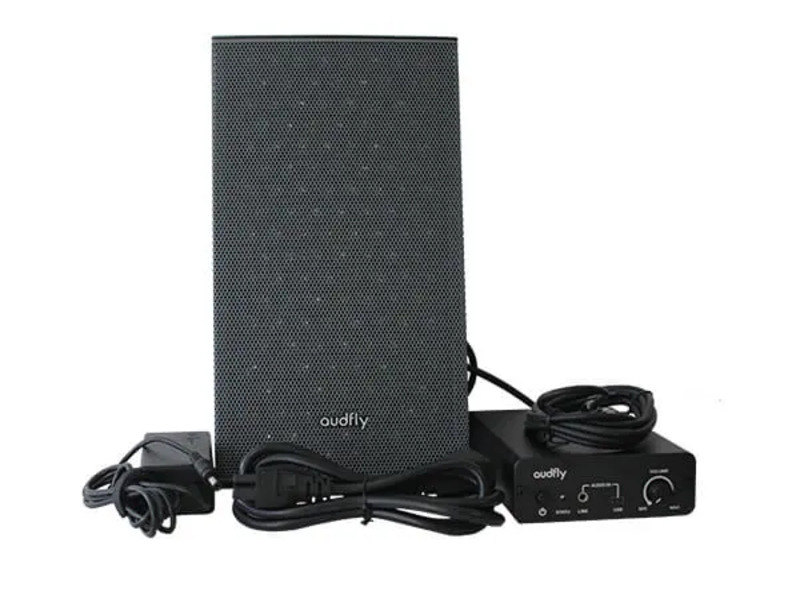
This directional sound amplifier provides a fully directional sound solution
View Details →Audfly Model R directional loudspeakers are meticulously crafted for ceiling scenarios.
View Details →Model X2 delivers an unparalleled stereo experience for an immersive audio journey.
View Details →The design and aesthetic of the speaker should align with its intended environment. In a home setting, you might prefer speakers that blend with your interior design, whereas in a commercial space, the speaker's visibility might be a key consideration.
Your budget is a crucial factor. Research various brands and their offerings to find the best balance between cost and quality. It’s also wise to consider the reputation of the brand for reliability and customer service.
Before making a decision, read customer reviews and, if possible, test the product. Reviews can provide real-world insights into performance and durability, while testing the speaker yourself can give you a better idea of its audio quality and suitability for your needs.
As directional audio technology continues to evolve, its applications are expanding across museums, retail environments, digital signage, exhibitions, transportation hubs, and interactive public spaces. Businesses are increasingly adopting directional audio solutions to deliver personalized sound experiences, reduce noise pollution, and improve user engagement.
With ongoing advances in ultrasonic sound, beamforming technology, and intelligent audio control, directional audio is expected to play an even greater role in creating focused and immersive listening experiences. As demand for privacy, comfort, and targeted communication continues to grow, directional audio technology will remain an important part of modern commercial audio solutions.
To learn more about directional audio applications and products, explore Audfly's directional speaker solutions or browse our case studies to see real-world installations.
Directional audio technology enhances sound quality by focusing the audio beam directly at the listener. This reduces sound dispersion and ensures that the audio is clear and precise, minimizing ambient noise interference.
Yes, directional speakers can indeed be used outdoors. We offer outdoor directional speakers designed specifically for outdoor environments, allowing you to choose the most suitable option based on your needs.
Directional audio speakers are versatile and suitable for a wide range of music genres. However, their unique sound projection qualities might be more appreciated in settings where focused listening is desired.
The price of directional speakers can vary, often costing more than traditional speakers due to their advanced technology. However, the price should be weighed against the unique benefits they offer, such as targeted sound delivery and reduced noise pollution.
Directional audio refers to the technology that focuses sound into a specific area, while directional speakers are the devices used to deliver that technology.
In many public applications, directional audio can provide a personal listening experience without requiring users to wear headphones.


.png)
.png)





.png)
.png)
.png)


.png)


.png)