.png)
Tel: +86-13761027061

E-mail: contactus@audfly.com

.png)


.png)
Worried that the directional speaker you're considering won't project sound far enough, might disturb others, or won't perform well in complex environments? This article reveals 5 key purchasing points, from principles to applications, teaching you how to choose a truly effective and hassle-free directional speaker, avoiding wasted budget.
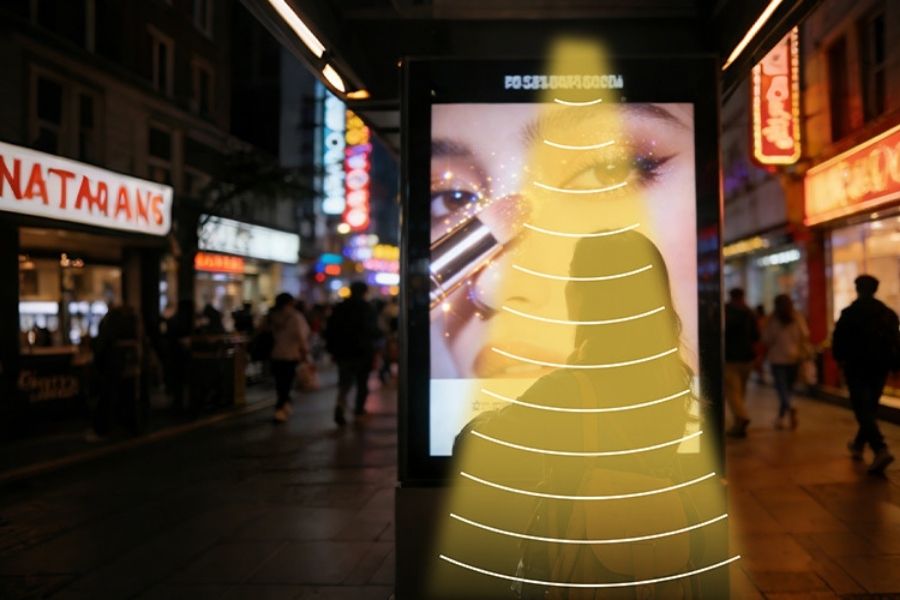
With increasing demands for sound control, directional speakers, with their unique advantages of "strong directionality, clear sound within the sound field, and no disturbance outside the sound field," are widely used in various scenarios such as squares, playgrounds, exhibition halls, and commercial advertising. However, the quality of products on the market varies greatly, making it difficult for many buyers to choose a truly suitable directional speaker. Don't worry, mastering these 5 purchasing secrets will help you easily avoid pitfalls and make a wise decision.
Before choosing, ask yourself this question: What will I primarily use it for?
Different scenarios have completely different technical requirements and priorities for speakers:
Open public spaces (such as squares, parks, and playgrounds): The primary considerations are sound pressure level (volume) and transmission distance. It's crucial to ensure sufficient volume in the target area in an open environment. At the same time, directional accuracy is paramount to minimize noise disturbance to surrounding residents, which is the original intention of this type of application.
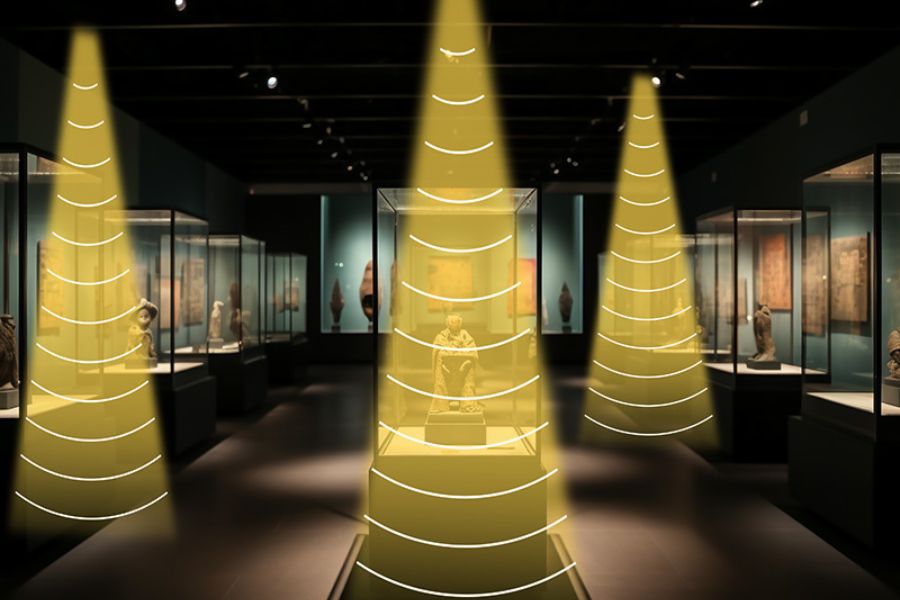
Indoor displays and advertising (such as museums, exhibition halls, and supermarket shelves): The focus is on sound focusing ability and voice clarity. It's necessary to ensure that the sound is strictly controlled in front of the exhibits or shelves, avoiding sound interference between different exhibition areas and creating an immersive experience.
Avoid this pitfall: Do not blindly pursue a "universal" speaker. A high-power speaker designed for an outdoor square will become a problem in an indoor museum due to the difficulty in precise control.
The core of directional speakers lies in their technology for controlling the direction of sound propagation. Leaving aside complex theories, for procurement and engineering personnel, the key to determining whether a directional speaker is suitable for your project is understanding the core parameters that directly affect deployment, installation, and system compatibility.
What it is: Simply put, it's the maximum "loudness" the speaker can produce.
How to judge: The larger the number, the further and more powerful the sound travels. For outdoor scenarios (such as squares, playgrounds, and highways), it is recommended to choose products with a high maximum sound pressure level to ensure that the target area remains clearly audible in noisy environments. Requirements can be appropriately lowered for indoor applications.
What it is: This represents the "thickness" or "spread" of the sound beam, like the beam angle of a flashlight.
How to judge: The smaller the angle (e.g., ±15°), the more concentrated the sound, the more precise the directionality, and the more effectively it prevents sound leakage to non-target areas. Typically, ±10° to ±15° is a good balance between coverage and precision. You can understand this as the product's "precise sound control" capability.
Rated Power: This directly relates to how much power amplifier the speaker needs to drive it, and indirectly affects its maximum potential loudness. More power isn't always better; it needs to match your SPL requirements and amplifier.
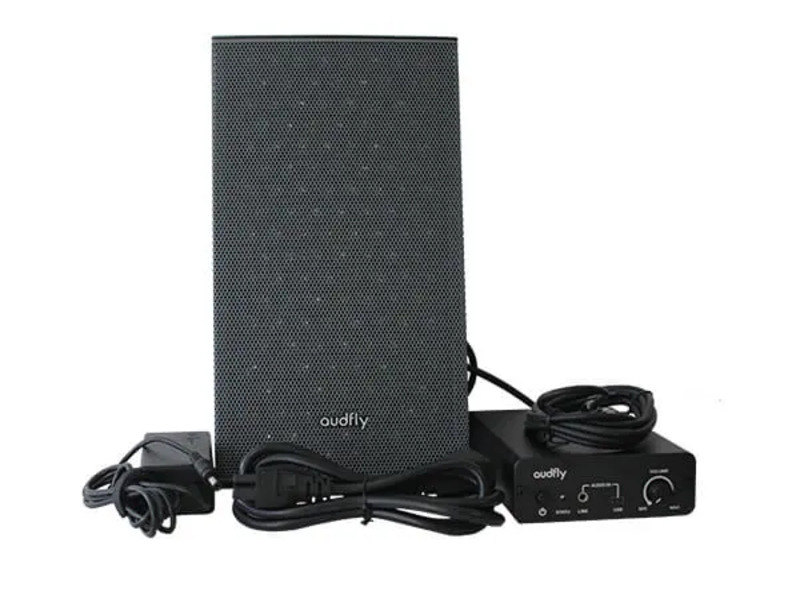
Integrated Amplifier: This is a crucial point! Ask if the product has a built-in amplifier. Models with built-in amplifiers (i.e., active speakers) greatly simplify deployment, requiring only a sound source to operate; passive speakers require an additional matching amplifier, increasing system complexity and cost.
Dimensions and Weight: These directly affect the choice of installation location, the load-bearing requirements of the bracket, and the ease of installation. Especially for wall mounting or scenarios requiring concealed deployment (such as museums and high-end exhibition halls), a compact and lightweight size is a huge advantage.
Input/Output Interfaces: Check the types of interfaces provided (e.g., XLR, 3.5mm AUX, Type-C, etc.) to ensure seamless integration with your existing audio system (e.g., mixing console, media player).
What it is: This refers to the range of sound frequencies that the speaker can effectively reproduce, for example, 115Hz~20kHz.
How to judge: This parameter determines what content the speaker is best suited to play. A wider frequency range provides richer musical performance; however, if the primary use is for speech (such as advertisements or guided tours), the low-frequency requirements can be relaxed, but clarity in the mid-to-high frequencies is crucial.
Avoiding pitfalls: Parameters are fundamental, but it's even more important to focus on the brand's technological consistency. A product that performs well in terms of parameters is often supported by mature directional sound technology. Whether it's ultrasonic modulation or beamforming, top brands can demonstrate their deep technical expertise in controlling sound wave directionality and minimizing sound leakage through these core parameters. Be wary of vendors who provide impressive specifications but cannot offer real-world experience or technical verification
No matter how impressive the specifications are on paper, nothing beats actually listening to it. Whenever possible, strongly request an on-site demonstration or watch a video showcasing the system in a real-world scenario.
When testing, pay attention to two points:
The installation and adjustment of directional speakers directly affect the final result.
Directional speakers are products used over a long period, so the brand's technological expertise and after-sales service are crucial.
Choosing a directional speaker is a comprehensive process involving considerations from principles to practice, and from parameters to user experience. By mastering the five key tips above, you will be able to avoid most common pitfalls. Remember, an excellent directional speaker is not only a demonstration of technology, but also a deep reflection of concern for the social environment and user experience.


.png)
.png)





.png)
.png)
.png)


.png)


.png)